
BEAM Circular Acquires State-of-the-Art Gas Fermentation Pilot System To Anchor California Bioeconomy Innovation Campus
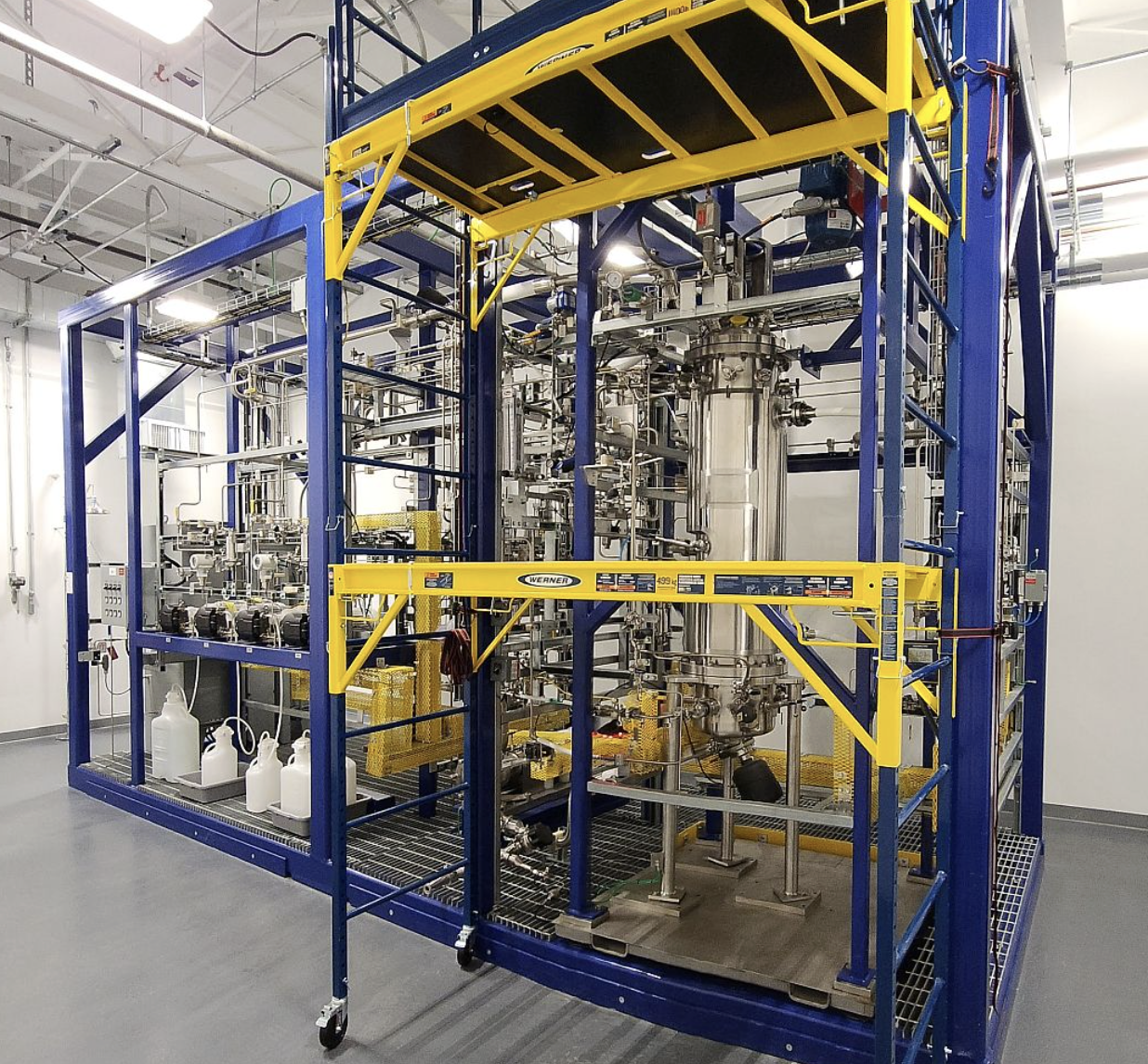
Gas fermentation pilot unit acquired by BEAM Circular to accelerate circular bioeconomy innovation will help companies commercialize cutting-edge biotechnologies.
Modesto, CA (January 15, 2026) — BEAM Circular announced today that it has acquired a state-of-the-art gas fermentation pilot system, marking a major milestone in the development of the California Bioeconomy Innovation Campus, a regional biomanufacturing hub in Stanislaus County, advanced with support from Stanislaus County, North Valley Thrive, and the State of California. The Campus is supported through a $10.4 million California Jobs First grant and an $8 million State Budget allocation dedicated to expanding circular bioeconomy innovation and manufacturing capacity in California’s Central Valley.
BEAM Circular’s newly acquired 130-liter pilot-scale gas fermentation bioreactor system represents one of the most advanced and versatile units of its kind. It is capable of supporting biotechnologies that transform gases into valuable products, from sustainable proteins to specialty chemicals, fuels, and materials. This first major equipment acquisition for the Innovation Campus fills a critical infrastructure gap in the U.S. bioindustrial ecosystem. Pilot-scale gas fermentation capabilities at this scale are rare globally and practically non-existent in the U.S.
“This investment is a game-changer for California and for the U.S. bioeconomy,” said Karen Warner, CEO of BEAM Circular. “By providing open-access pilot infrastructure, we’re helping innovators turn waste gases into opportunity by supporting new companies, new products, and new jobs that advance a more sustainable and prosperous future for local communities.”
Gas fermentation technologies can deliver major environmental benefits by transforming climate-warming gases such as methane or carbon dioxide into renewable products. These gases can be sourced from wastewater treatment plants, dairy digesters, and waste processing facilities or from industrial operations such as cement or ethanol production, creating new pathways for economic value and pollution reduction in communities such as California’s Central Valley.
While the Innovation Campus is under development, the system will be hosted at the Mango Materials production facility in Vacaville, California, where it will integrate with Mango’s pioneering methane-to-biomaterials platform before being relocated to the Innovation Campus in Stanislaus County for long-term operations. Mango Materials is recognized internationally as a leader in renewable bioproduct innovation and currently produces PHA, which is a fully biodegradable polymer, using methane from the Easterly Wastewater Treatment Plant.
Through this partnership, BEAM Circular and Mango Materials will offer fee-based R&D and pilot services to companies developing gas fermentation technologies, helping innovators scale and validate their processes under real-world conditions. The unit’s modular design and flexible control system allow use of different gases and microbial systems, providing a powerful testbed for technologies seeking to scale from pilot to commercial deployment.
As a leader in gas fermentation, Mango Materials is committed to scaling its own technology as well as supporting the broader gas fermentation industry. This mutually beneficial relationship between Mango Materials and BEAM Circular will allow the broader gas fermentation community to benefit from Mango's extensive gas fermentation experience, while enabling Mango to augment its existing pilot facility with an additional fermentation system.
“Mango Materials is thrilled to partner with BEAM Circular to expand access to gas fermentation scale-up capacity,” said Dr. Molly Morse, CEO of Mango Materials. “Our team has spent more than a decade advancing methane-based fermentation technology, and this partnership will allow more innovators to bring climate-positive solutions to market faster.”
The gas fermentation system will also strengthen BEAM Circular’s collaboration with Lawrence Berkeley National Laboratory (Berkeley Lab), co-lead of BEAM’s CBIO Collaborative Innovation Engine, which provides advanced bioprocessing scale-up capabilities at its Advanced Biofuels and Bioproducts Process Development Unit (ABPDU). Together, BEAM Circular, Berkeley Lab, and Mango Materials are helping build a connected, world-class innovation ecosystem that links early-stage R&D to real-world manufacturing in California.
By investing in cutting-edge infrastructure and partnerships, BEAM Circular and its collaborators are cementing California’s global leadership in circular bioeconomy innovation, sustainable biomanufacturing, and climate technology commercialization.
About BEAM Circular
BEAM Circular is a nonprofit organization building California’s circular bioeconomy through shared infrastructure, partnerships, and programs that connect agriculture, manufacturing, and innovation. Based in the North San Joaquin Valley, BEAM Circular leads regional and statewide initiatives—including the California Bioeconomy Innovation Campus and the CBIO Collaborative—to accelerate technologies that transform waste into valuable products and create inclusive economic opportunity. Learn more at www.beamcircular.org.
About Mango Materials
Mango Materials is a California-based biomanufacturing company turning methane—a potent greenhouse gas—into PHA, a biodegradable polymer that can replace conventional plastics. Recognized globally for its groundbreaking methane-to-materials platform, Mango Materials partners with utilities, wastewater facilities, and brands to transform waste carbon into renewable materials that return safely to nature. Mango Materials has expertise in polymer formulation and sells formulated PHA under the brand name YOPP, including a set of sandbox toys. Learn more at www.MangoMaterials.com and www.madewithyopp.com.
